Caring for yourself
This photo does not represent an actual patient and care partner.
Prevent yourself from burnout and take care of YOU
Burnout can manifest differently for
care partners, but there are ways to
take back control
Stay in tune with yourself as much as you can to identify changes before they become too much to handle. If you notice changes in mood (irritability, crying, hyperfocus on issues that may not be critical to the patient’s care), use or increased use of alcohol, weight loss or overeating, or inability to sleep through the night, you may be experiencing burnout.
To prevent and bounce back from burnout, it's important to protect personal space by choosing a time during the day to dedicate
to yourself and doing things that bring you emotional and physical relief.
The important work you do as a care partner deserves recognition and care of its own
Care partners often hear what they should be doing—but knowing it and allowing yourself to do it are two different things. The truth is, your care matters too, and it’s not selfish—it’s essential.
Even 10 minutes a day can help protect your emotional and physical well-being—whether it’s stepping outside, having a quiet cup of coffee, or laughing with someone who gets it, these small acts aren’t extras. They’re anchors helping you feel more like yourself and reminding you that while this journey is uniquely yours, you still deserve to be you.
Every care journey is different, but making space for yourself each day helps protect your mental and physical health for the long term.
When caring responsibilities are light, caregivers should unabashedly take the time to care for themselves. For example, if your loved one is on ADT or radiation therapy, the caregiving lift is lighter than if your loved one is on chemotherapy. This is the time for you to spend more time on your own health and wellness. With chemotherapy, patients may receive treatment once every 3 weeks and need much more support with meals, transportation, symptom management, and potentially trips to the ER, which leaves you with less time to care for yourself.
Take things day by day, week by week, to make time for you
“The main thing a caregiver has to be responsible for is themselves. They can do nothing for their spouse, their loved one, their dad, brother, if they are not healthy themselves."
—Susan*, care partner
*Name changed for care partner privacy.
Make time for yourself
Below you can find different ways to care for yourself that feel possible and remind you it's not selfish to care for YOU.
Eat nutritious meals
A balanced diet supports both your immune system and energy levels
It’s easy to get caught up in a busy day—or in caring for someone else—and forget to think about your own meals. Here are some simple tips to help you eat well, even on the go.
Tips:
- Include fruits, vegetables, and whole grains in every meal
- Keep protein-rich snacks like nuts, yogurt, or peanut butter on hand
- Pack healthy snacks for long days at appointments
Healthy Meal Planning
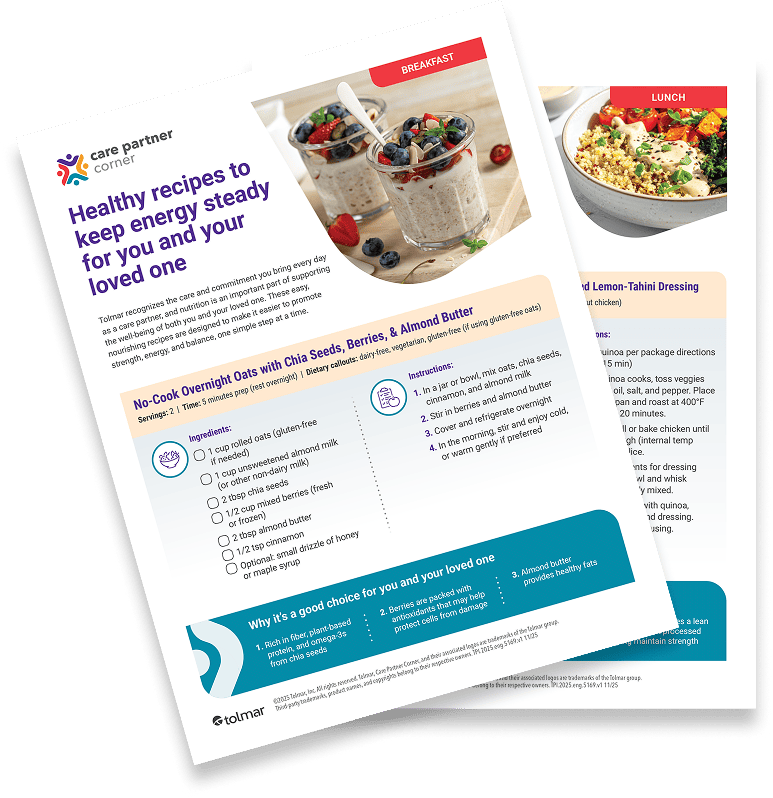
Need quick, healthy recipes for meal planning? Download a few to get your household started!
Stay physically active
As a care partner, your time and energy often go to someone else. But even short bursts of activity can add up and make a difference—for your stress levels, sleep, and overall well-being
Experts recommend aiming for about 150 minutes of moderate activity a week, but that doesn’t have to mean long workouts.
Try:
- A 10-minute walk during a break
- Stretching or yoga while your loved one rests
- Dancing around the kitchen, biking, or joining a caregiver-friendly fitness class
- Finding support groups that include physical activity as part of their meetups
Remember, caring for yourself helps you care better for someone else.
Learn more about the benefits of exercise, and how it affects your health in the short and long term
Get quality sleep
Getting enough rest isn’t a luxury—it’s a necessity
Sleep supports your mental focus, emotional balance, and physical strength, all of which you need to care for someone else. Aim for at least 7 hours a night when you can, and don’t feel guilty for resting.
Quick Tips:
- Wind down with a bedtime routine
- Take short naps when needed
- Avoid screens before bed
Maintain your medical health
Make time for your own checkups
It’s easy to put your loved one’s needs first, but that does not mean skipping your own checkups. Staying on top of your health means you’ll be more present, steady, and capable when they need you most.
To do:
- Set reminders for your doctor visits and medications
- Track your symptoms or health changes in
a journal
Take care of your emotional
well-being
Lean on a support system
It's normal to feel overwhelmed or emotionally drained when you're a care partner, but guilt about your loved one's cancer and not "doing enough for them" and shame about resenting being a caregiver are common feelings. These can feel extremely uncomfortable and hard to manage. While these feelings may never disappear completely, you don't have to deal with them alone. Reach out to friends, family, professional help, or caregiver support groups
to help you feel grounded and better equipped. Just having someone to talk to or help with small tasks can lift a big weight off your shoulders.
Reach out to:
- Trusted family members or friends
- Support groups for care partners
- Your loved one’s care team for a mental health referral
- A licensed therapist, oncology social workers, or mental health counselors
- Hospitals or nonprofits for caregiver-
specific mental health resources to explore

- Reena Cherry, MS, PA-C, Principal Consultant of Resilient Caregivers
Identify tasks to delegate to others
You have your own strengths, but you can't always take on every task
Perhaps you are overwhelmed by being the contact person with your loved one's family, or you need someone else to take on the cooking. Think about people in your life that would be happy to help you in areas that they also enjoy.
Try:
- Asking a trusted friend or family member to be a point of contact to disseminate important updates about your loved one to other family members so you can enjoy more time off your phone
- Having a neighbor make one meal, once a week for you and your loved one
- Asking a family member or friend who enjoys fitness to take your loved one on a walk or show them a new exercise every few weeks
Prioritizing your mental health matters
You can't pour from an empty cup
Caring for someone you love can be deeply meaningful—but also exhausting. And while it may feel hard to prioritize yourself, your well-being is essential. It’s okay to say “no” and step back when you need to. Setting boundaries helps you preserve the energy you need to show up with presence and taking breaks isn’t selfish—it’s sustainable caregiving.
Try:
- Taking short, intentional breaks throughout the day—even just stepping outside for a few minutes
- Saying no to extra responsibilities when your plate is full
- Recharging through small joys: listening to music, journaling, gardening, or anything that brings calm
- Noticing signs of burnout early—fatigue, irritability, withdrawal—and checking in with someone you trust
- Do something just for you: music, hobbies, journaling
- Step outside for fresh air
Self-care isn’t a reward. It’s a lifeline. The more you tend to your emotional well-being, the more grounded and resilient you'll feel—for yourself and your loved one
Journal your experience
Writing can be a powerful tool
It can help you process emotions, manage stress, and reflect on what’s working. As a care partner, journaling can help you make sense of the ups and downs, track how you're coping, and create space just for you. It’s not about writing the perfect entry—just allowing yourself a moment to pause and breathe.
Try:
- Keeping a daily or weekly log of your thoughts, worries, or small victories
- Using a journal or note-taking app to jot things down in real time
- Reflecting on moments where you felt strong, supported, or connected to your loved one
Make space for yourself
Carve out small moments just for you
Whether it’s reading a good book, taking a warm bath, or enjoying a quiet lunch out, these simple acts help restore your energy and reconnect you with who you are outside of caregiving. You might even revisit an old hobby or interest that brings you peace. These aren’t indulgences—they’re lifelines that help you show up fully for your loved one.
Try:
- Scheduling one small act of self-care each week—something you enjoy, just for you
- Setting boundaries around your time and giving yourself permission to pause
- Reconnecting with an old hobby or activity you’ve missed
Reclaim what brings you joy
Keep your spark alive
As a care partner, it’s easy to lose sight of yourself in the rhythm of appointments, caregiving tasks, and constant worry. But staying connected to the things that make you feel alive—your creativity, your passions, your peace—isn’t optional. It’s what helps sustain you for the long haul.
Try:
- Watching a comedy or feel-good movie with your loved one to lighten the mood
- Taking small solo outings—lunch by yourself, a walk, a bookstore visit
- Planning low-pressure time with friends or family, even if it’s just a phone call
- Creating a playlist of songs that lift your spirits
- Keeping a list of go-to comfort rituals like a warm bath, a good book, or journaling