
Understanding advanced
prostate cancer
This photo does not represent an actual patient and care partner.
Advanced prostate cancer is a complex disease
Advanced prostate cancer may feel like a sudden diagnosis or may progress quickly or over time, and your role may become more hands-on. From managing appointments and medications to supporting emotional health, advanced prostate cancer can bring more complexity. By better understanding advanced prostate cancer, you can be prepared for what to expect to help you feel more in control, even when things feel uncertain.
Advanced prostate cancer is cancer that has spread beyond the prostate gland and may be referred to as stage III or stage IV prostate cancer. While treatments cannot cure advanced prostate cancer, they can help slow its spread and control symptoms to help prolong life.1,2
- Locally advanced cancer is cancer that has spread beyond the prostate gland into nearby tissues, lymph nodes, and/or seminal vesicles (a pair of small glands next to the prostate)
- Metastatic cancer is cancer that has spread to distant parts of the body such as the bones, lungs, or liver
The impact of advanced prostate cancer
have advanced metastatic prostate cancer at the time they are first diagnosed3
with prostate cancer experience recurrence after initial treatment4



Understanding progression in prostate cancer
If your loved one has been diagnosed with advanced prostate cancer, you may hear different terms to describe the spread of the disease, including the term progression. Progression in prostate cancer helps define if the cancer has returned, where it is in the body, and if it’s still confined to areas near the prostate (local) or has spread to distant areas beyond the prostate gland (metastatic). Certain tests like blood tests and imaging may be conducted and can help determine the spread of prostate cancer.1,5
Confirmed recurrence or progression
One type of progression is called biochemical recurrence, which is when prostate-specific antigen (PSA) has risen after initial treatment and new symptoms may have appeared. The treatment approach may depend on your loved one’s PSA levels. If PSA levels are low, the cancer may be considered low risk and doctors may consider watchful waiting or active surveillance (terms that describe a situation where a disease is being closely monitored but not being treated). If PSA levels are high, the cancer is considered high risk, and the medical team may want to start hormone therapy.1,5
After treatment of biochemical recurrence, the cancer may sometimes progress to one of the different types of advanced prostate cancer. These types are classified based on their response to hormone therapy to lower testosterone and how the cancer has spread. Different types of advanced prostate cancer include5-8:
- Non-metastatic castration-sensitive prostate cancer (nmCSPC) – Prostate cancer that still responds to hormone therapy and has no detectable spread of cancer on imaging
- Metastatic castration-sensitive prostate cancer (mCSPC) – Prostate cancer that still responds to hormone therapy, but has spread to other parts of the body
- Non-metastatic castration-resistant prostate cancer (nmCRPC) – Prostate cancer that has stopped responding to hormone therapy (as indicated by rising PSA levels), but has no detectable spread of cancer on imaging
- Metastatic castration-resistant prostate cancer (mCRPC) – Prostate cancer that has stopped responding to hormone therapy (as indicated by rising PSA levels) and has spread to other parts of the body
If your loved one has castration-resistant prostate cancer (nmCRPC or mCRPC), it is natural to wonder why hormone therapy is still needed. The reality is that prostate cancer is never completely independent of testosterone levels for its ability to grow and progress. This means that, even if prostate cancer has become castration-resistant, hormone therapy still plays an important role in its management.
Here’s what typical progression from early to advanced prostate cancer can look like and what treatment options are commonly recommended.9
ADT, androgen deprivation therapy; ARPI, androgen receptor pathway inhibitor; PARPi, poly (adenosine diphosphate-ribose) polymerase inhibitor.

80%-90% of men with prostate cancer remain castration sensitive within 5 years of follow-up from diagnosis10

Remember, it’s okay to be uncertain—just keep moving forward
It’s important to be there for your loved one if he learns he has progressed in his disease. You both may be scared, and that’s normal. Offer compassionate listening and encourage him to talk about how he feels or to speak with a therapist who can help him navigate the emotions he is having. You may even consider going to therapy with him so you can both talk more openly. It is also important for you to gather information about his cancer stage and type of advanced prostate cancer so you can prepare for next steps with his doctor, including asking about available treatments.
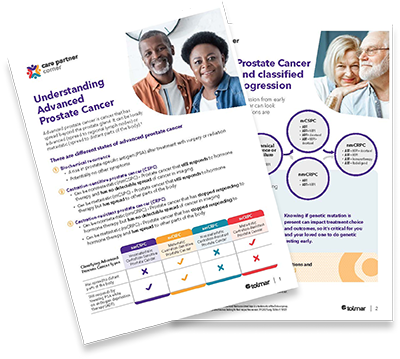
Understanding Advanced Prostate Cancer
Get more information about advanced prostate cancer, including tests for progression and different advanced prostate cancer types